
Active ingredient
Triclopyr
Pyridine carboxylic acid (synthetic auxin)
A synthetic auxin — it mimics a plant growth hormone, so the plant grows itself to death rather than being burned.
What it does
Controls the broadleaf and woody weeds a standard three-way struggles with: ground ivy, wild violet, poison ivy, kudzu, brambles and cut stumps. It translocates, which is why it reaches a root system a contact product cannot.
What it does not do
It is not a grass killer and it is not a fast one. Symptoms take days to weeks, and on perennials one pass is a start rather than a finish — Penn State expects repeat applications over a season and across years for wild violet.
The label constraint people miss
The formulation decides the job. An ester behaves differently from an amine salt in heat and near desirable plants, and a turf-labelled triclopyr is a different product from a brush triclopyr even at similar concentrations. Read which one you have.
Products we review that contain it
Every product below is here because we opened its label — on EPA's own database or the registrant's — and read Triclopyr in the ingredient statement. Registration numbers are on each product's page.
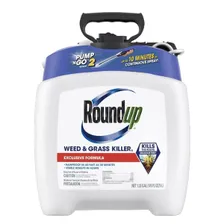
Non-Selective Ready-to-Use Herbicide (wand sprayer)
Roundup Weed & Grass Killer₄ with Pump 'N Go 2 Sprayer (1.33 gal)
★★★★☆ (3.5/5)
The most important thing about this bottle is what is no longer in it: Bayer removed glyphosate from residential Roundup, and this is one of the replacements.
Best for: Spot-killing weeds in driveways, patios and bed edges with no mixing
$22–$28
View on Amazon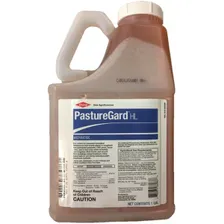
Selective Brush and Broadleaf Herbicide — pasture and rangeland label
Corteva (Dow AgroSciences) PastureGard HL Herbicide (1 gal)
★★★★☆ (4.3/5)
Listed here so the answer is on the record: this is the triclopyr and fluroxypyr combination people find while shopping for lawn weeds, and its label does not cover residential turf.
Best for: Brush and woody broadleaf control on pasture, rangeland and non-crop acreage
$150–$180
View on Amazon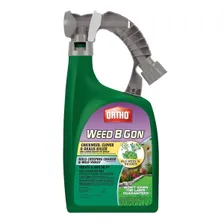
Selective Broadleaf Herbicide (concentrate)
Ortho Weed B Gon Chickweed, Clover & Oxalis Killer Concentrate
★★★★☆ (4.4/5)
Triclopyr on its own, which is exactly what extension services name for the two weeds that shrug off ordinary three-way products — and the reason to check your grass type before buying.
Best for: Creeping Charlie and wild violet on a cool-season or zoysia lawn, applied in autumn
$19–$24
View on Amazon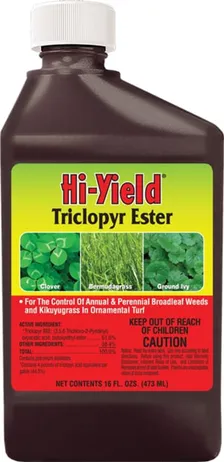
Selective Broadleaf Herbicide — cool-season turf label (ester concentrate)
Hi-Yield Triclopyr Ester, 16 oz
★★★★☆ (4.2/5)
Sold as a brush killer and labelled as a turf herbicide. The label's only site is perennial bluegrass, perennial ryegrass and tall fescue — and ground ivy and wild violet are both on its weed list.
Best for: Ground ivy and wild violet in a Kentucky bluegrass, perennial ryegrass or tall fescue lawn
$33–$42
View on Amazon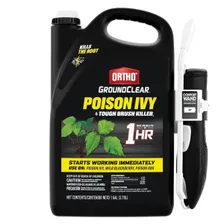
Brush and Poison Ivy Herbicide (ready-to-use)
Ortho GroundClear Poison Ivy & Tough Brush Killer Ready-to-Use, 1 gal
★★★★☆ (4.3/5)
The right active ingredient in the form most people actually want for poison ivy: pre-mixed, with a wand, so there is nothing to measure while wearing gloves.
Best for: A defined patch of poison ivy or brush around a fence, shed or path, without mixing anything
$25–$30
View on Amazon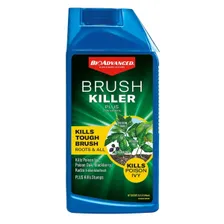
Brush and Poison Ivy Herbicide (concentrate)
BioAdvanced Brush Killer Plus Concentrate, 32 oz
★★★★★ (4.6/5)
The product Alabama Extension's own kudzu control table lists by name, at the strength that table gives — 8.8% triclopyr amine.
Best for: Poison ivy, kudzu and brush at property scale, mixed to the rate an extension table actually publishes
$22–$28
View on Amazon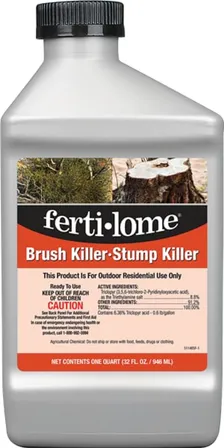
Brush and Stump Herbicide (concentrate)
Fertilome Brush Killer & Stump Killer Concentrate, 32 oz
★★★★★ (4.5/5)
Same active and strength as the other 8.8% triclopyr concentrate here, with the cut-stump instruction printed on the label rather than inferred.
Best for: Cut stumps and woody vines on a residential property, where the label gives you the undiluted stump rate outright
$24–$30
View on Amazon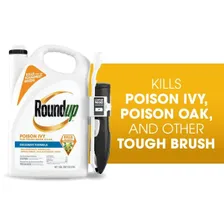
Brush and Poison Ivy Herbicide (concentrate, two actives)
Roundup Poison Ivy Plus Tough Brush Killer Concentrate, 32 oz
★★★★☆ (4.4/5)
A Roundup-branded bottle that genuinely does contain glyphosate — 18% of it — plus 2% triclopyr, and is therefore non-selective in a way the pure triclopyr bottles are not.
Best for: Clearing a fence line or bank completely, where grass and brush both have to go
$26–$32
View on Amazon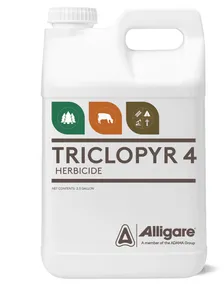
Brush and Woody Plant Herbicide (ester concentrate, 61.6%)
Alligare Triclopyr 4 Herbicide, 1 Quart
★★★★★ (4.5/5)
61.6% triclopyr ester, and the base registration that the widely-sold Hi-Yield bottle is a narrowed distributor label of.
Best for: Basal bark and cut-stump brush work across acreage, at the lowest cost per treated acre of any triclopyr here
$36–$45
View on Amazon


Guides that use Triclopyr
- Best Brush Killer: The Method Decides the Formulation
- Best Pasture Weed Killer: The Weed Picks the Product
- How to Get Rid of Oxalis: It Comes Back Two Ways
- Triclopyr Ester vs Amine: Same Active, Different Risk
- How to Kill Bermuda Grass in a Fescue Lawn: Mow It Out First
- Brush Control in Pasture: Mowing Multiflora Rose Spreads It
Buy for the active, then read the label anyway. Two products with the same active are not interchangeable — concentration, labelled sites and species tolerances all vary, and a three-part registration number means a narrowed label. How to read one in two minutes. Where our page and your container disagree, the container is the legal authority.